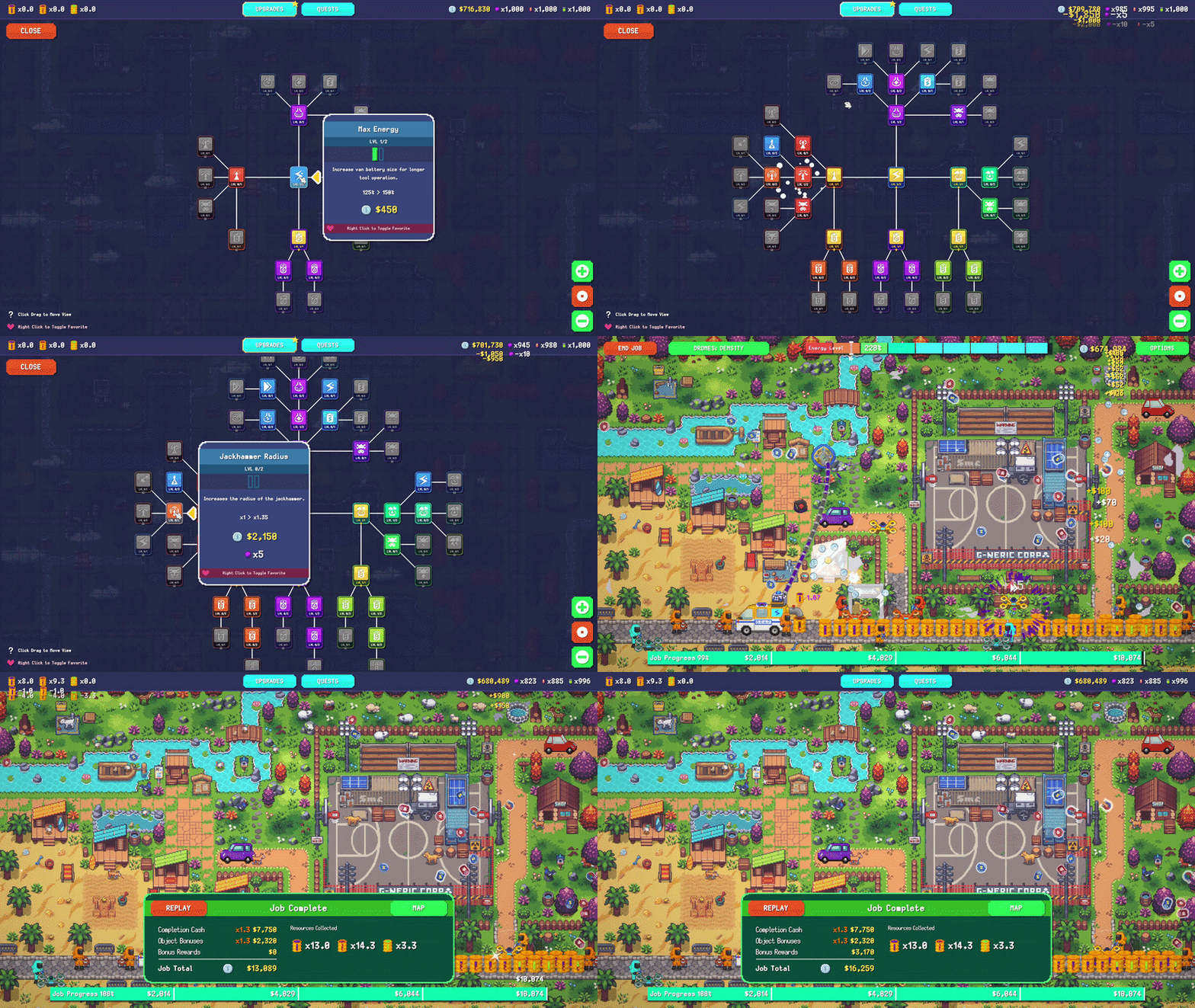
Drones are where Sludgineers starts feeling less like one long hose and more like a small cleanup crew. Current full-release footage shows Vacuum drones, Jackhammer drones and later Air Filter drones, while the official achievement list includes Drone Swarm — All drones unlocked.
What the drones actually change
A drone does not make energy management disappear. It moves some of the work off your cursor and gives you another battery/capacity problem to optimize.
Video-tested play shows drones:
- automatically working on pollution or crystals;
- running on their own battery;
- returning / emptying when capacity is reached;
- benefiting from upgrades such as radius, battery, capacity and performance;
- becoming strong enough later that the player can let them handle a meaningful section while focusing on another mechanic.
The exact targeting UI can vary by stage, so we avoid presenting one early video’s targeting menu as a universal hidden rule.
Vacuum Drone
The Vacuum Drone is the most immediately useful helper because sludge is everywhere. It can reduce the amount of your personal battery spent on basic cleanup and, in later footage, becomes strong enough to clear large areas while the player works on crystals or gas.
If it constantly fills and goes home, capacity is the problem. If it has plenty of room but dies quickly, battery is the problem. If it is cleaning too slowly to matter, performance/suction is the problem.
Jackhammer Drone
The Jackhammer Drone becomes valuable as crystal density rises. A weak version still struggles with dense nodes, but every crystal the drone finishes is Jackhammer time you did not pay for personally.
Radius becomes especially interesting once crystals cluster. Full-release footage shows drone radius getting large enough to materially change how much of a cluster it can cover.
Air Filter Drone
Gas maps create more simultaneous work than earlier areas: sludge, crystals, gas clouds and vents can all be active. That is when the Air Filter Drone stops feeling optional. If the player can keep the filter focused on vents/clouds while drones maintain the rest of the map, runs become much less chaotic.
Patch #1 changed drone economics
Patch #1 reduced the Draxine and money cost of Drone Capacity and Speed upgrades by roughly 30%. That is a major reason not to copy exact upgrade prices from launch-day video.
The patch also increased refined resources from Safes by 250%, which can indirectly help late upgrade purchasing when safes are part of your current route.
Which drone should you upgrade first?
Upgrade the one that is solving your current progression wall:
- sludge wall → Vacuum Drone;
- crystal wall → Jackhammer Drone;
- gas wall → Air Filter Drone.
Spreading resources evenly looks tidy, but it can leave all three helpers mediocre. A specialized helper that removes a full category of manual work is usually more valuable than three drones that each die halfway through their task.